
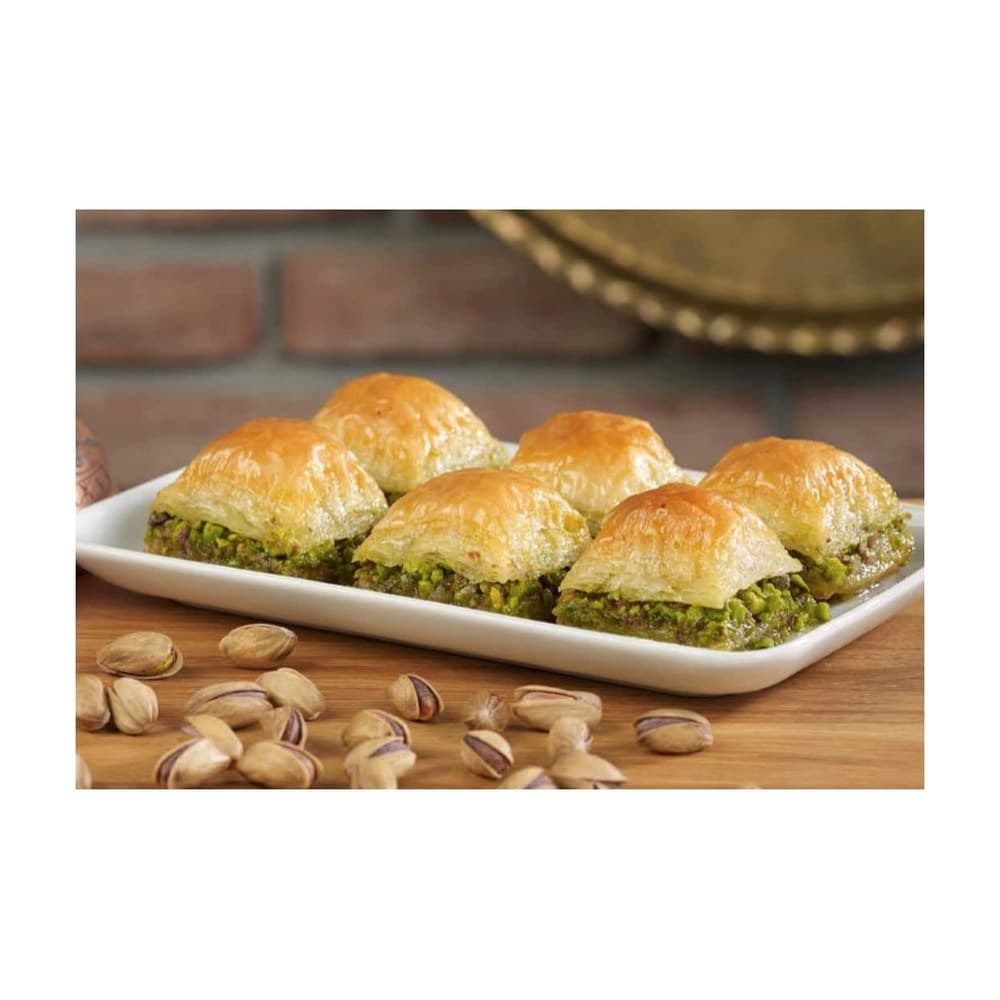
Premium Turkish Baklava (Pistachio)
Ask Bio about this product
AI assistant · instant answers
Freshly made Turkish pistachio baklava. Halal Baklawa. Baklava is a rich, sweet dessert pastry made of layers of filo filled with chopped nuts and sweetened and held together with syrup or honey. Although the history of baklava is not well documented, its current form was probably developed in the i
Get a reminder for regular delivery and save with code SUBSCRIBE10 at checkout. Pause or cancel anytime.
Sold and dispatched by Bonvila View store →
Chilled items & warm-weather notice
We ship chilled (perishable) foods with ice-gel packs, kept refrigerated. In warm weather, light oil sweating on cured products such as sucuk/pastırma, or softening of cheese, is normal and not a sign of spoilage — it returns to normal once chilled. Please refrigerate items immediately on delivery and be available to receive your order on the delivery day.
Perishable foods are exempt from the 14-day change-of-mind return; your statutory rights for genuine quality or safety issues remain unaffected.
Description
Freshly made Turkish pistachio baklava.
Halal Baklawa.
Baklava is a rich, sweet dessert pastry made of layers of filo filled with chopped nuts and sweetened and held together with syrup or honey.
Although the history of baklava is not well documented, its current form was probably developed in the imperial kitchens of the Topkapı Palace in Istanbul. The Sultan presented trays of baklava to the Janissaries every 15th of the month of Ramadan in a ceremonial procession called the Baklava Alayı.
There are three proposals for the pre-Ottoman roots of baklava: the Roman placenta cake, as developed through Byzantine cuisine, the Central Asian Turkic tradition of layered breads, or the Persian lauzinaq.
The oldest (2nd century BCE) recipe that resembles a similar dessert is the honey covered baked layered-dough dessert placenta of Roman times, which Patrick Faas identifies as the origin of baklava: "The Greeks and the Turks still argue over which dishes were originally Greek and which Turkish. Baklava, for example, is claimed by both countries. Greek and Turkish cuisine both built upon the cookery of the Byzantine Empire, which was a continuation of the cooking of the Roman Empire. Roman cuisine had borrowed a great deal from the ancient Greeks, but placenta (and hence baklava) had a Latin, not a Greek, origin—please note that the conservative, anti-Greek Cato left us this recipe."
Several sources state that this Roman dessert continued to evolve during the Byzantine (Eastern Roman) Empire into modern baklava. In antiquity the Greek word plakous (Greek: πλακοῦς) was also used for Latin placenta, and the American scholar Speros Vryonis describes one type of plakous, koptoplakous (Byzantine Greek: κοπτοπλακοῦς), as a "Byzantine favorite" and "the same as the Turkish baklava", as do other writers. Indeed, the Roman word placenta (Greek: πλατσέντα) is used today on the island of Lesbos in Greece to describe a baklava-type dessert of layered pastry leaves containing crushed nuts that is baked and then covered in honey.
Fıstıklı Baklava
Questions & answers
Ask Bio — questions answered by our team are published here.
No published questions yet. Ask Bio — once our team answers, it appears here.
Similar Options
Other choices in this category
Complete Your Basket
Goes well with this product
Customers also bought
Based on real order data