

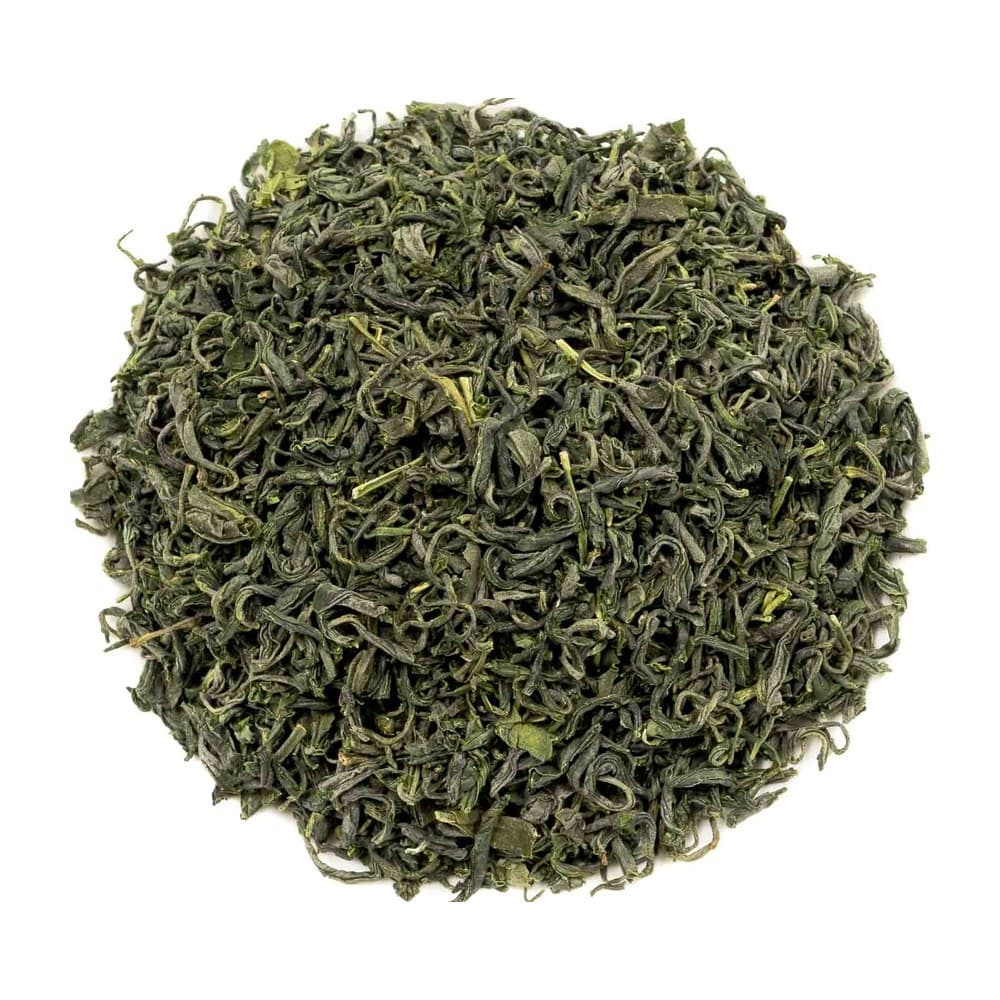
Ashikita 100 Year Old Tree Zairai Kamairicha
Product Specifications
| Product Code | CUR-E14.3s |
|---|---|
| Size | 10g |
Ask Bio about this product
AI assistant · instant answers
Ashikita 100 Year Old Tree Zairai Kamairicha is a balanced green tea picked from 100-year-old native heirloom zairai plants in Ashikita District. This green tea is pan-fried, resulting in a smooth character. The vegetal profile has a savoury flavour with nutty and toasty notes and a lasting mineral
Get a reminder for regular delivery and save with code SUBSCRIBE10 at checkout. Pause or cancel anytime.
Supplied and dispatched by Curious Tea View store →
Description
Ashikita 100 Year Old Tree Zairai Kamairicha (芦北町在来釜炒り茶) is a Japanese green tea crafted from zairai or ‘native’ plants that are approximately 100 years old. Grown to organic standards at a recently recovered tea garden, it is carefully crafted by Kajihara-san to create an elegant flavour with vegetal, savoury and nutty notes. Current harvest on offer is from May 2026. We source this tea directly from the grower, Mr Toshihiro Kajihara.
Kajihara-san recently recovered two abandoned tea gardens, including this one where the trees were planted approximately 100 years ago. He took over this garden in 2021, located in the Tsuji District of Tsunagi Town. The plantation was abandoned for many years and completely overgrown with weeds. The first step was to cut down the tea trees to knee height using heavy machinery. The weeds were removed and the first tea leaves were harvested in 2023. Initially, the output of the tea plants was minimal as they recovered from heavy pruning, but with every year the output is increasing. Looking back at the history of the tea garden, it is not known who planted it, but it was done during the Meiji period and the trees were all grown from seed. The garden is surrounded by mandarin orange plantations and presents quite a different terroir compared to other teas from Ashikita.
This Ashikita 100 Year Old Tree Zairai Kamairicha green tea is crafted from zairai (在来), or ‘native’ plants. Zairai does not refer to a single cultivar in a classic sense. Rather, in Japan, it refers to any collection of ‘native’ tea plants. Generally, these are old tea gardens with plants that pre-exist modern cultivars and have therefore evolved on their own. Most times these plants would also be grown from seeds rather than cuttings, thus greatly diversifying the variety of plants in the garden. Generally, zairai gardens produce lower yields and are less uniform in output. This is a negative aspect for the farmers as it makes harvesting and processing more costly and complicated while yielding lower returns. However, zairai gardens are very much part of Japanese tea heritage and give a fascinating insight into what tea used to be like before modern selection processes and cultivars were introduced.
It is also a pan-fried tea; kamairicha (釜炒り茶) literally translates as ‘pan-fried tea’. Pan-frying or steaming fresh tea leaves is the process that stops oxidation of the leaves, making green tea. Most Japanese green teas are steamed, which results in a distinctive taste that tends to be heavy on grassy, savoury and astringent flavours. By contrast, kamairicha undergoes pan-frying, resulting in a different flavour profile that is more balanced with sweeter and lighter green notes. Less than 5% of Japan’s current tea output is within the pan-fried category.
The process of pan-frying tea leaves first arrived in Japan from China in the Edo period, around the 17th century. This was the preferred method for stopping leaf oxidation in order to produce green tea. To this day, this is the most common green tea production process around the world. It is considered that the first time steamed tea was produced in Japan was in 1737 when a tea grower named Nagatani Sōen developed a new process of tea production. This process, which consists of steaming the tea leaves first, then rolling them and finally drying them in the oven is considered to be the standard production method of tea in modern Japan. By contrast, pan-frying has fallen out of favour due to demand for steamed Japanese-style tea as well as the ease of processing steamed tea. It is much easier to automate steamed tea production, thus greatly reducing production costs. By contrast, pan-frying is still largely performed by hand and requires great skill from the tea master to achieve the perfect results. Hence, the general rarity and higher costs for pan-fried kamairicha green tea.
This Ashikita 100 Year Old Tree Zairai Kamairicha green tea is truly an experience of the past. Utilising traditional zairai plants and heritage processing methods, this kamairicha is a unique experience, allowing us to travel back in time to experience the style of Japanese tea from many centuries ago. This green tea has dark green curled dry leaves that are very neat in appearance. The liquor has a bright yellow-green colour with a vegetal aroma. The vegetal profile produces a savoury flavour with nutty and toasty notes. It has a slight dry, floral aspect and verdant notes with hints of umami and seaweed. The aftertaste is a little drying, mineral and lasting.
It is best brewed at 80°C for around 2-3 minutes, with multiple infusions. For gongfu brewing, we recommend using 4g per 100ml at 80°C in a kyusu or gaiwan. Start with an initial infusion of 30 seconds, adding 5–10 seconds to each subsequent steep.
You may also be interested in other teas crafted by Kajihara-san.
Questions & answers
Ask Bio — questions answered by our team are published here.
No published questions yet. Ask Bio — once our team answers, it appears here.
Similar Options
Other choices in this category
Complete Your Basket
Goes well with this product
Customers also bought
Based on real order data