

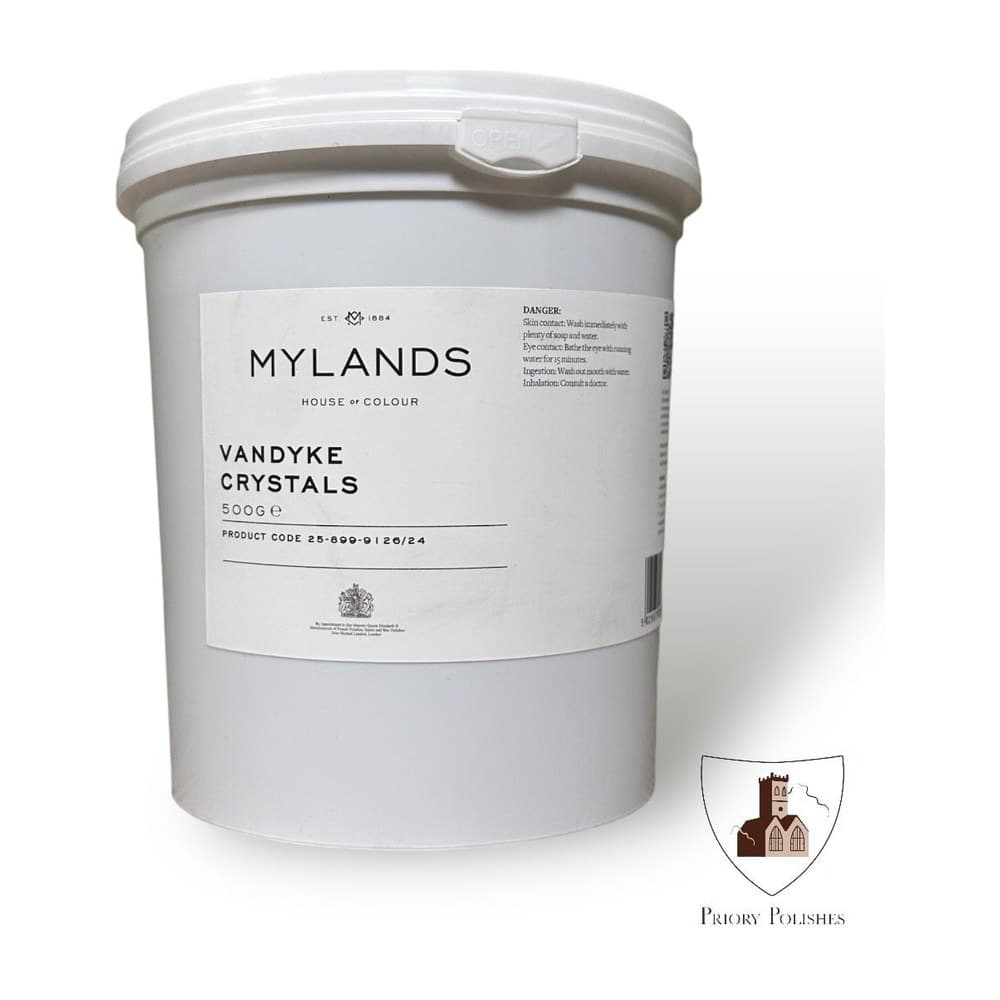
Mylands Van Dyke Crystals – 500g
Ask Bio about this product
AI assistant · instant answers
Mylands Van Dyke Crystals are a traditional water-based wood dye made from walnut husks. Simply dissolve the crystals in water to create a rich brown wood stain, with the colour ranging from light to dark depending on the strength of the solution. Ideal for furniture restoration, traditional wood st
Get a reminder for regular delivery and save with code SUBSCRIBE10 at checkout. Pause or cancel anytime.
Sold and dispatched by Priory Polishes View store →
Description
Mylands Van Dyke Crystals are a traditional wood dye made from walnut husks. When dissolved in water, the crystals produce a natural-looking brown wood stain that can be adjusted from a light brown shade to a much deeper, darker colour depending on the concentration of the solution.
Van Dyke Crystals have traditionally been used for staining timber and are particularly useful in furniture restoration and woodworking. They are suitable for colouring woods such as Oak, Mahogany and Walnut, enhancing the natural appearance of the grain while adding depth and warmth to the timber.
Supplied as dry crystals, they offer flexibility over the final colour strength, allowing you to prepare a lighter or darker wood dye to suit your particular project.
Features and Benefits
- Traditional wood dye made from walnut husks
- Water-based stain prepared by dissolving the crystals in water
- Creates attractive brown wood shades
- Colour can range from light to dark depending on concentration
- Suitable for traditional wood staining techniques
- Ideal for furniture restoration and woodworking
- Suitable for staining Oak, Mahogany and Walnut
- Supplied in a 500g pack
Van Dyke Crystals – Mixing and Colour Strength
One of the main advantages of Mylands Van Dyke Crystals is the ability to control the strength of the finished wood dye.
By adjusting the amount of crystals dissolved in water, you can create different shades of brown to suit your timber and desired finish.
- Light brown: Use a weaker solution with a lower concentration of crystals.
- Medium brown: Increase the concentration to produce a richer brown shade.
- Dark brown: Use a stronger solution with a higher concentration of crystals.
The final colour will also depend on the natural colour, grain and absorbency of the timber. Always prepare a small test mixture and try it on an inconspicuous area or spare piece of the same wood before treating the whole surface.
Where Can Mylands Van Dyke Crystals Be Used?
Mylands Van Dyke Crystals are suitable for traditional wood staining and are particularly useful for furniture restoration and decorative woodworking.
- Oak: Add brown colour to Oak while allowing the natural grain to remain visible.
- Mahogany: Enhance the appearance of Mahogany and create deeper brown tones.
- Walnut: Complement the natural colour of Walnut and deepen its appearance.
- Furniture restoration: Useful for staining suitable bare timber during antique and furniture restoration.
- Woodworking projects: Suitable for colouring new or stripped timber before applying a compatible protective finish.
How to Prepare and Apply Mylands Van Dyke Crystals
Mylands Van Dyke Crystals must be dissolved in water before application. The concentration of the solution determines how dark the finished stain will be.
- Prepare the timber: Ensure the wood is clean, dry and free from wax, polish, grease and any previous surface coatings. Existing varnish or paint should be removed before staining.
- Prepare the dye: Add the crystals gradually to water and stir until dissolved. Start with a small quantity of crystals so that you can control the strength of the solution.
- Test the colour: Apply a little of the prepared dye to a spare piece of the same timber or an inconspicuous area. Allow it to dry to assess the colour.
- Adjust the strength: Add more crystals if a darker shade is required, or more water if you want a lighter colour.
- Apply the dye: Apply evenly to the prepared timber using a suitable brush or cloth, working consistently to avoid uneven colouring.
- Allow to dry: Leave the stained timber to dry thoroughly before applying a suitable protective wood finish.
Always test the complete staining and finishing process before treating the whole piece of furniture. The final appearance can change depending on the timber and the clear finish applied over the dye.
Finishing Wood After Applying Van Dyke Crystals
Once the Van Dyke dye has dried, the timber can be treated with a suitable protective finish to complete the appearance and help protect the stained surface.
Depending on the project, you may wish to use a suitable wood varnish, French Polish or wood oil. Always check compatibility and test the complete finish on a spare piece of timber first.
Frequently Asked Questions
What are Mylands Van Dyke Crystals?
Mylands Van Dyke Crystals are a traditional wood dye made from walnut husks. They are supplied as dry crystals which are dissolved in water to produce a brown wood stain. The strength of the solution determines how light or dark the finished colour will be.
What colour do Van Dyke Crystals produce?
Van Dyke Crystals produce brown wood dye, with shades ranging from light brown to dark brown depending on the concentration of crystals used. The final colour will also depend on the natural colour and absorbency of the timber.
How do you mix Mylands Van Dyke Crystals?
Dissolve the crystals in water, stirring until they have fully dissolved. Start with a weaker solution and gradually increase the concentration until you achieve the desired shade. Always test the mixture on a spare piece of timber before use.
Can I make Van Dyke Crystals darker?
Yes. To produce a darker brown stain, increase the concentration of crystals in the water. For a lighter colour, use a weaker solution by adding more water.
What wood can Van Dyke Crystals be used on?
Mylands Van Dyke Crystals are traditionally used for staining woods such as Oak, Mahogany and Walnut. The final shade will vary according to the natural colour and absorbency of the timber.
Are Van Dyke Crystals water-based?
Yes. The crystals are dissolved in water to produce a water-based wood dye. This makes it easy to adjust the colour strength by changing the concentration of the mixture.
Can Van Dyke Crystals be used on antique furniture?
Yes. Van Dyke Crystals are particularly useful for traditional furniture restoration and wood staining. They can be used to add brown colour to suitable bare timber before applying an appropriate protective finish.
Can I apply varnish over Van Dyke Crystals?
Once the dye has dried thoroughly, a suitable wood varnish may be applied to protect the timber. Always test the complete combination on a spare piece of wood first to check compatibility and the final appearance.
Do Van Dyke Crystals need to be applied to bare wood?
For the best results, apply the prepared dye to clean, bare timber. Existing varnish, wax, polish and other coatings can prevent the dye from penetrating evenly, so these should be removed before staining.
How much Mylands Van Dyke Crystals do I need?
Mylands Van Dyke Crystals are supplied in a 500g pack. The amount needed will depend on the size of the project and how concentrated you make the dye. A stronger solution will use more crystals than a lighter stain.
Buy Mylands Van Dyke Crystals from Priory Polishes
Buy Mylands Van Dyke Crystals 500g from Priory Polishes, ideal for traditional wood staining, antique furniture restoration and woodworking projects. Create your own brown wood dye by simply dissolving the crystals in water and adjusting the concentration to achieve your desired shade.
Browse our range of Mylands products, wood stains and antique restoration materials.
Questions & answers
Ask Bio — questions answered by our team are published here.
No published questions yet. Ask Bio — once our team answers, it appears here.
Similar Options
Other choices in this category
Complete Your Basket
Goes well with this product
Customers also bought
Based on real order data