

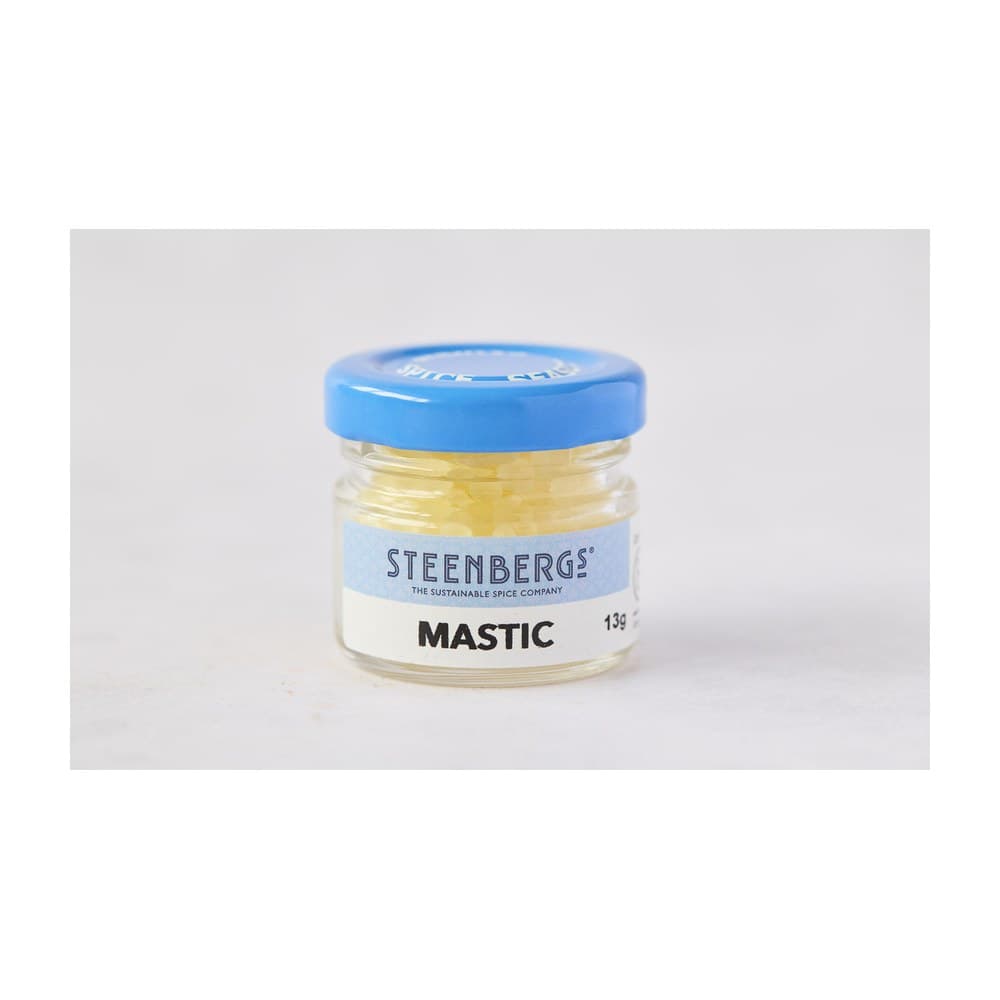
Mastic
Ask Bio about this product
AI assistant · instant answers
Mastic is a distinctive tear shaped dried resin from the mastic tree on the Island of Chios. It’s flavour is mild, mineral-like. Use in Turkish delight, ice cream and sweet milk-based puddings.
Get a reminder for regular delivery and save with code SUBSCRIBE10 at checkout. Pause or cancel anytime.
Supplied and dispatched by Steenbergs View store →
Description
Mastic is a specialist spice. It is a dried gum from the gum mastic tree. Mastic is slightly chewy and has a mild resinous flavour. It’s a flavouring in many traditional Mediterranean recipes – the Greek Easter bread, tsoureki, or Turkish delight.
It comes from the mastic plant that’s grown on the Island of Chios in Greece. It is a protected product. We buy directly from the only source – The Chios Mastiha Growers Association.
Tears of mastic come from this plant. The grade we use is ‘Small Tears Number 3’. They were used as one of the original chewing gums, which is where the name comes from – as in ‘to masticate, chew’. The tears are chewy in a crunchy rather than chewy gum way and have cleansing taste akin to furniture polish, which is bizarrely pleasing.
Axel’s Tasting Notes: Gum mastic has a flavour that is bitter and mineral-like that becomes more neutral after a few minutes of chewing, keeping its freshening flavour even after 15 or more minutes.
Gum mastic is found in: liqueur (mastiko), sweets (Turkish delight; ypovrichio ‘submarine sweets’), baked goods (tsoureki), puddings (samali). Also, found in the traditional spice rub for doner kebabs.
More about Mastic
The gum mastic tree, Pistacia lentiscus, comes traditionally from the Greek island of Chios. The gum mastic tree is a slow-growing, hardy evergreen that is normally 2 – 3 metres high.
Gum mastic trees start production when 5 – 6 years old and can be used for production for 70 years.
The mastic tree has shiny, dark-green leaves, with a rough trunk which exudes a resin when tapped. This resin is gum mastic.
Harvesting takes place between July and October, when the trunks are cut diagonally and the resin oozes out. The resin is collected, washed, cleaned and then laid out to dry.
Gum mastic is usually sold as tears, or small pieces, of 2 – 3 mm in size, with a brittle texture and a faint pine-like aroma.
Mastic is a cooking ingredient and is not suitable for use in other ways. We do not recommend daily ingestion and it should not be used in greater amounts than 1 g in a day. Should you have any reaction from eating mastic, you must stop eating it immediately and seek medical advice from a suitable professional.
Questions & answers
Ask Bio — questions answered by our team are published here.
No published questions yet. Ask Bio — once our team answers, it appears here.
Similar Options
Other choices in this category
Complete Your Basket
Goes well with this product
Customers also bought
Based on real order data