

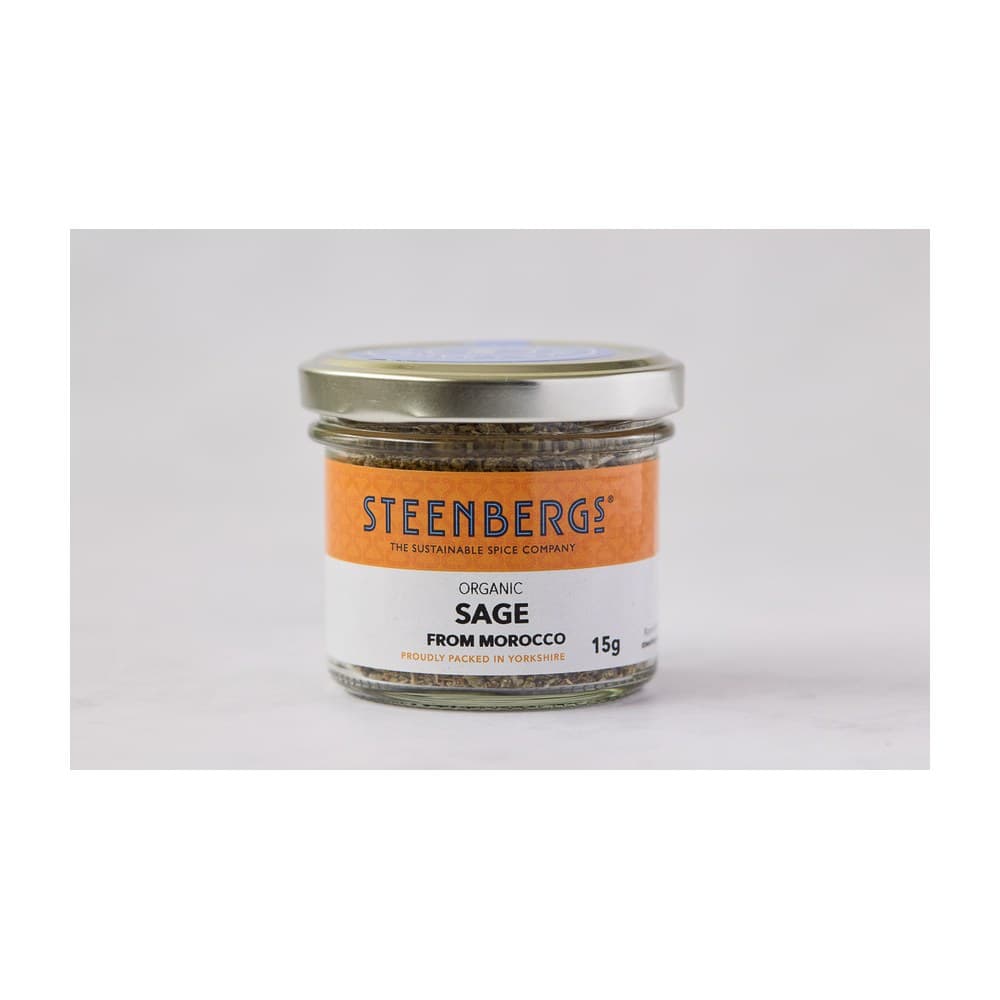
Sage
Ask Bio about this product
AI assistant · instant answers
Organic Sage has a distinctive herby flavour that’s pungent, musky and slightly astringent. Use in small quantities as it’s a strong herb. Works well with pork and duck, or with breadcrumbs for stuffings; for something different, flavour savoury scones with sage.
Get a reminder for regular delivery and save with code SUBSCRIBE10 at checkout. Pause or cancel anytime.
Supplied and dispatched by Steenbergs View store →
Description
Organic Sage has a distinctive herby flavour that’s pungent and slightly astringent. Use in small quantities as it’s a strong herb but works well with breadcrumbs for stuffings, and dumplings, or in meat loaf or sausages or to rub on pork before roasting. Organic Sage’s savoury herbiness works a treat in savoury scones.
Steenbergs sources the highest quality organic Sage that we pack down in North Yorkshire in small batch runs.
Sage works best with meat, especially chicken and pork, but can also be rubbed into vegetables for oven-roasted root vegetables. For a perfect, simple baked chicken or pork, sprinkle with lemon juice or salt, sage and pepper. Sage is traditionally used for poultry stuffing (sage and onion stuffing is a British classic) and breakfast sausages, but its rich strength lends itself well to many dishes, such as beef roasts, pork chops and game dishes like venison, duck and goose. Try adding it to flavour salt-free dishes, sprinkle on turkey breasts or add to soups and sauces. Leftover turkey or chicken can be pepped up with a bit of rubbed sage.
Axel’s Tasting Notes: Pungent; Sage is a strong aromatic herb that is warm with slight bitter afternote and a hint of camphor.
More about Sage
Sage is a hardy evergreen shrub, Salvia officinalis. Salvia triloba is also popular because it’s less woody. It has greyish-green oblong leaves and herbal sage is prepared from these leaves. Commercial crops come principally from the Dalmatian coast area, from Italy and the UK.
To harvest sage, the grower cuts off the top 20 cm or so of growth before the flavour appears, and the dried leaves are the separated from the stems before further processing.
Sage leaves are wide, gray-green, rough and downy on the top of the leaves. It can be a quite wooly and woody herb, so it may need cleaning.
Questions & answers
Ask Bio — questions answered by our team are published here.
No published questions yet. Ask Bio — once our team answers, it appears here.
Similar Options
Other choices in this category
Complete Your Basket
Goes well with this product
Customers also bought
Based on real order data